Over time, SPYPOINT’s executives found that customers use their cameras not only for hunting, but also as security cameras to monitor various locations, be it a sugar shack, a residential property, or a construction site. This security camera sector led to the formation of the VOSKER company. “SPYPOINT, with its hunting cameras, has been in existence for 17 years and has experienced substantial growth, generating a turnover of tens of millions of dollars. And VOSKER, which started from scratch two years ago, should surpass SPYPOINT within two years,” observes Danny Angers.
GTX is experiencing such a demand for hunting and security cameras that it struggles to meet. “And what also explains our rapid growth is that the cameras sold last year are being connected this year,” he observes.
Connecting the World
According to its directors, GTX continues to grow because it is constantly innovating and offering quality products. “But what makes the difference is not so much the camera, it’s the fact that it’s mobile network-enabled. It’s the connectivity. We are experiencing significant growth, but there are many markets that are not connected,” reiterates Danny Angers. He mentions, amongst other things, excavators, boats, snowmobiles, or fire hydrants.
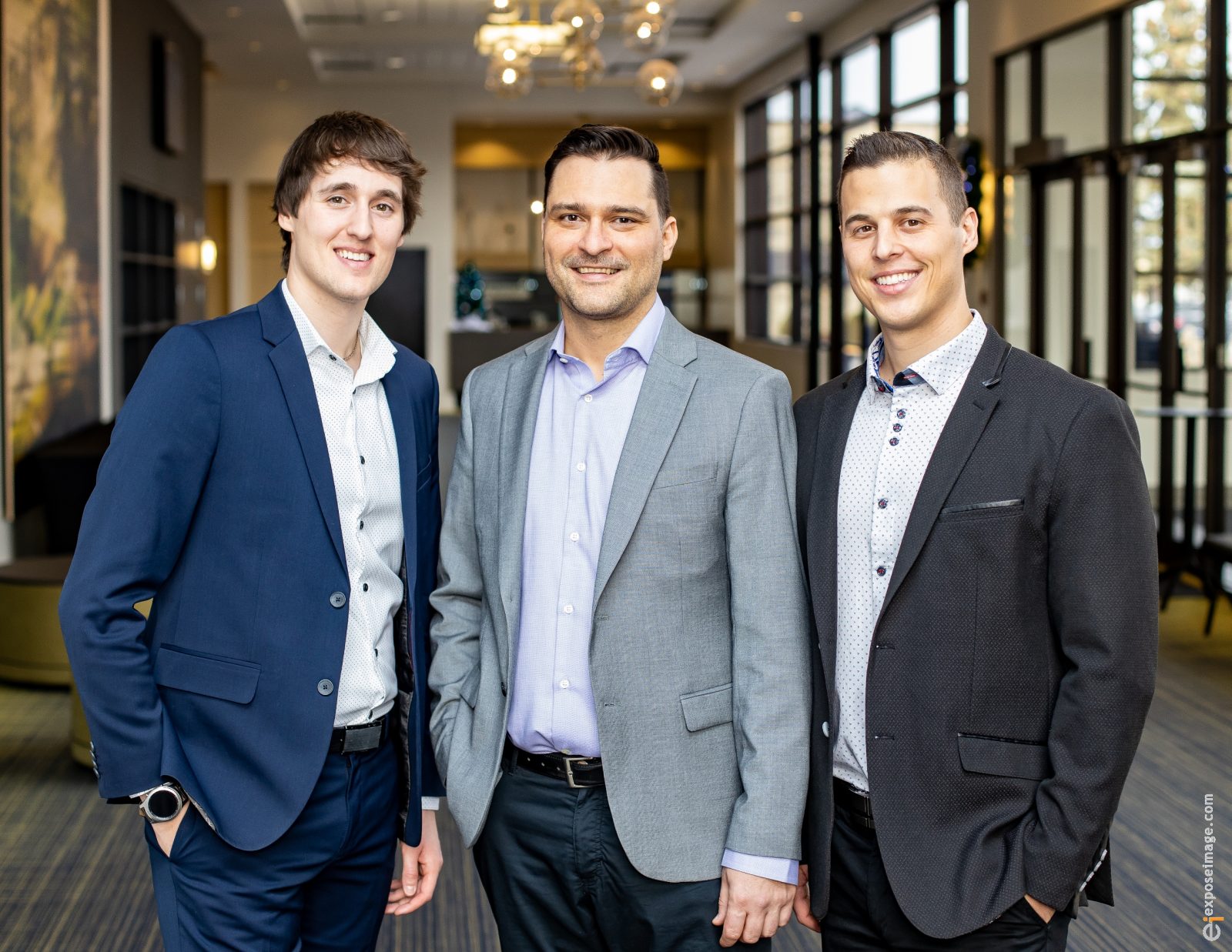
GTX can connect them all with the Internet of Things. They developed a platform capable of connecting everything. Danny Angers mentions that one of the reasons why the company is so successful is that, due to the pandemic, people have never had a greater desire to operate remotely. The three young leaders are thinking ambitiously, aiming to create a Quebec technology giant to “connect the world and make acquisitions” and anticipating a turnover in the billions of dollars. “Over the years, we have been able to finalise agreements in 145 countries; agreements with major suppliers like Bell, Rogers, Telus, and AT&T,” confides Danny Angers.
GTX executives are confident that the company’s development depends on its employees, especially those dubbed “technology giants”. According to Danny Angers, the employees are the ones propelling the company forward.
The rapid growth, however, meant that the company encountered a significant challenge in one aspect: customer service. “We weren’t ready. We received tens of thousands of calls and emails daily,” says the young entrepreneur. This led to the creation of ZENIOX. This new entity will be able to meet the demand and respond effectively to customers. However, management was acutely aware that staffing levels would never fully meet the demand. Consequently, a hybrid approach incorporating artificial intelligence minimised the need for additional recruitment. But GTX still had to increase its workforce. After a partially successful trial with an outsourcing provider in Longueuil, GTX agreed to launch its own customer service centre: ZENIOX. “Since they had 1,000 employees and were going to make some redundant because of the COVID-19 pandemic, we made them an offer to acquire human capital. We added 90 people to ZENIOX, diligent individuals whom we will train. They will be our employees, with full benefits and salary increments,” says Danny Angers. The first acquisition of human capital brings the total number of GTX employees to 345.
The Next Steps
With the wind in its sails, GTX is evaluating opportunities for business acquisitions. “In that sense, we’re looking for financing. We want the Quebec government to help us: we want to be the next Bombardier, the big company creating tens of thousands of jobs,” pleads Danny Angers. “The root of the war is the continuous data connection,” explains Danny Angers. GTX already collects more than a billion data points a year, which is comparable, he says, to a US technology giant. The planned acquisitions will allow for the accumulation of data. “Within five years, we will increase to 500 billion data points per year. The more we collect, the more we will make artificial intelligence capable of realising a futuristic reality worthy of science fiction. Humanity will go into an ultra-connected mode. Within 5 to 10 years, we think we’ll have enough eyes in the United States to see the flapping of a butterfly’s wings in Florida and be able to say that a tornado is forming in Seattle,” he imagines.
To keep moving forward, “to fight on equal terms”, says Danny Angers, “GTX is asking the government and other partners for millions of dollars. The people we are fighting against in China have received millions from their government. The Chinese government has even approached us to buy us out. That means they see the full potential of GTX. But we don’t want to sell. We know that we’ve got something big! American investors are also showing a lot of interest in the Victoriaville company, but we want to keep it Quebecois. It’s a question of pride,” says Danny Angers. It started here from nothing, and it expanded worldwide.
An investment between $80M and $100M would allow GTX to double its sales figures in 1 year and to multiply them by 10 in 5 years, allowing the company to reach the billion-dollar mark. At the time of the interview, the executives were hoping to meet the Minister for Economy and Innovation, Pierre Fitzgibbon.
“Investing in GTX is not risky. The company is already profitable and a long-term investment should pay for itself 10 times over. With our own money, we decided to invest $7 million this year and the same amount next year. We are working to acquire a company in the United States and are also discussing acquiring another in Quebec. We have also identified 180 potential acquisition targets within five years. We are investing, but we still need help to fight our rivals, and we would like the investors to be from Quebec,” he concludes.